
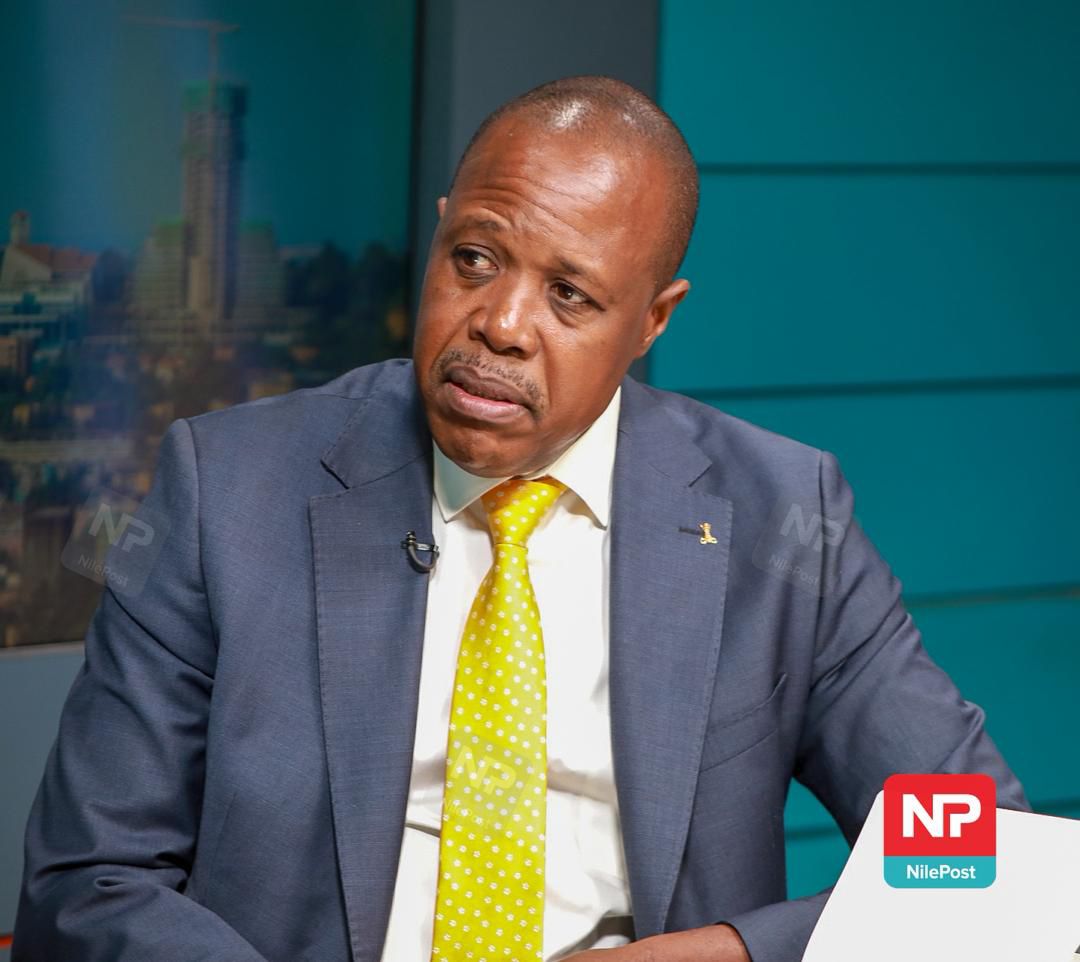
Kabweri County Member of Parliament–elect Dr. Patrick Wakida has called for a redefinition of the role of opposition politics in Uganda, arguing that the country’s current opposition landscape is largely driven by dissatisfaction rather than clear ideological alternatives to government policy.
Speaking during NBS Morning Breeze on Tuesday, Wakida said many Ugandans misunderstand the concept of opposition, often equating any disagreement with government decisions to opposition politics.
“Most people consider disagreeing with the government as opposition. However, opposition is a group of people with a different ideology than the government,” he said.
Wakida argued that in many developed democracies, opposition parties operate as “alternative governments,” presenting policy proposals that the ruling administration may adopt if they prove beneficial.
“In developed countries, they have alternative governments who make proposals to government and the government absorbs them. That’s opposition,” he said.
According to Wakida, Uganda’s opposition landscape has not fully embraced this model.
“In Uganda, many of the opposition are disgruntled groups. That’s not what it should be,” he said.
Wakida emphasized that meaningful opposition should be built on clear policy ideas rather than broad calls for political change.
“Change isn’t an ideology. It should be rooted on what you want to do. If you changed now, then what?” he said.
Wakida added that the opposition can only grow where citizens understand why and when they should oppose the state.
“Opposition can grow where people know why and when they should oppose the state,” he said.
Wakida also highlighted the financial and structural challenges many opposition parties face in Uganda.
“The reality in Uganda is that we have many parties struggling because of lack of resources. The opposition is competing with the state that can spend as much as it wishes,” he said.
Given the current environment, Wakida said the most practical approach in the short term may be individual political merit.
“The best we can achieve for now is individual merit,” he said.
Wakida questioned whether opposition support has significantly grown over the years, pointing to the 1996 presidential election in which Paul Kawanga Ssemogerere of the Democratic Party (DP) secured about 26 percent of the vote.
“If you compare that to the recent election, the number is almost the same. What growth has happened in the opposition?” he asked.
Walida also suggested that many Members of Parliament elected during the 2021 elections were carried into office by political momentum rather than firm ideological alignment.
“In 2021, most of the MPs were not necessarily opposing; they were just looking for a wave to win an election. NUP gave them that wave,” he said.
Wakida also said that internal divisions among opposition groups have weakened their ability to challenge the ruling establishment.
“In 2006, there was a sense of unity in the opposition. Today, everyone is trying to do their own thing. This is greed,” he said.
According to official results released by the Electoral Commission (EC) following the January 15, 2026 presidential elections, incumbent President Museveni of the ruling National Resistance Movement (NRM) secured 7,946,772 votes, representing 71.65 percent of the total valid votes cast.
The victory extends Museveni’s leadership to a seventh term in office and marks the first time in nearly three decades that he has surpassed the 70 percent threshold—last achieved in 1996, when he won with 74.3 percent.
His closest challenger, Robert Kyagulanyi Ssentamu, popularly known as Bobi Wine and contesting under the National Unity Platform ticket, garnered 2,741,238 votes, accounting for 24.72 percent of the vote.
Nathan Nandala Mafabi of the Forum for Democratic Change finished third with 209,039 votes, equivalent to 1.88 percent, while all other candidates received less than one percent of the vote.
The 12th Parliament is set to feature a strong majority for the ruling National Resistance Movement, which secured 370 legislators.
Other members will include 60 independents, 49 from the National Unity Platform, 12 from the Uganda People’s Congress, 10 from the Forum for Democratic Change, six from the Democratic Party, two from the People’s Front for Freedom, and one from the Alliance for National Transformation.
According to President Museveni, as of May 6, 2025, approximately 18.5 million voters are registered as members or supporters of the National Resistance Movement out of the country’s 21 million registered voters. He argued that if all NRM supporters turned up to vote, the party would secure about 18.5 million votes while the opposition would remain with roughly 2.5 million votes, translating to about 88 percent support for the ruling party.
Since the January 15 election, Kyagulanyi has openly rejected the results, labeling them “fake” and accusing the Electoral Commission of manipulating the process. He has also alleged that the Commission announced results without providing the mandatory Declaration of Results forms, although no substantial evidence has been offered to support these claims.
On January 16, 2026, Kyagulanyi reportedly left his Magere residence and went into hiding after his home was allegedly raided by military personnel. Since then, he has continued communicating with supporters through social media, maintaining that state security agencies are targeting him—an allegation the government has consistently denied.
Despite the controversy surrounding the election, Kyagulanyi has stated that he will not challenge the results in court, citing a lack of faith in the judiciary. Instead, he has called on his supporters to engage in peaceful protests, describing them as a show of solidarity against what he terms a stolen election.
Government officials have repeatedly dismissed claims of political persecution. The Minister for Information and Communications Technology and National Guidance, Chris Baryomunsi, said the state has no intention of arresting or harming the opposition leader.
Prime Minister Robinah Nabbanja also urged Kyagulanyi to stop what she described as “comedy” and return home to his family.
Responding to statements attributed to the Chief of Defence Forces, Muhoozi Kainerugaba, which appeared to suggest a pursuit of Kyagulanyi, Baryomunsi clarified that the government’s position remains unchanged.
According to the minister, security deployments around Kyagulanyi’s Magere residence are intended to prevent the home from becoming a hub for public disorder, not to threaten or detain him.
